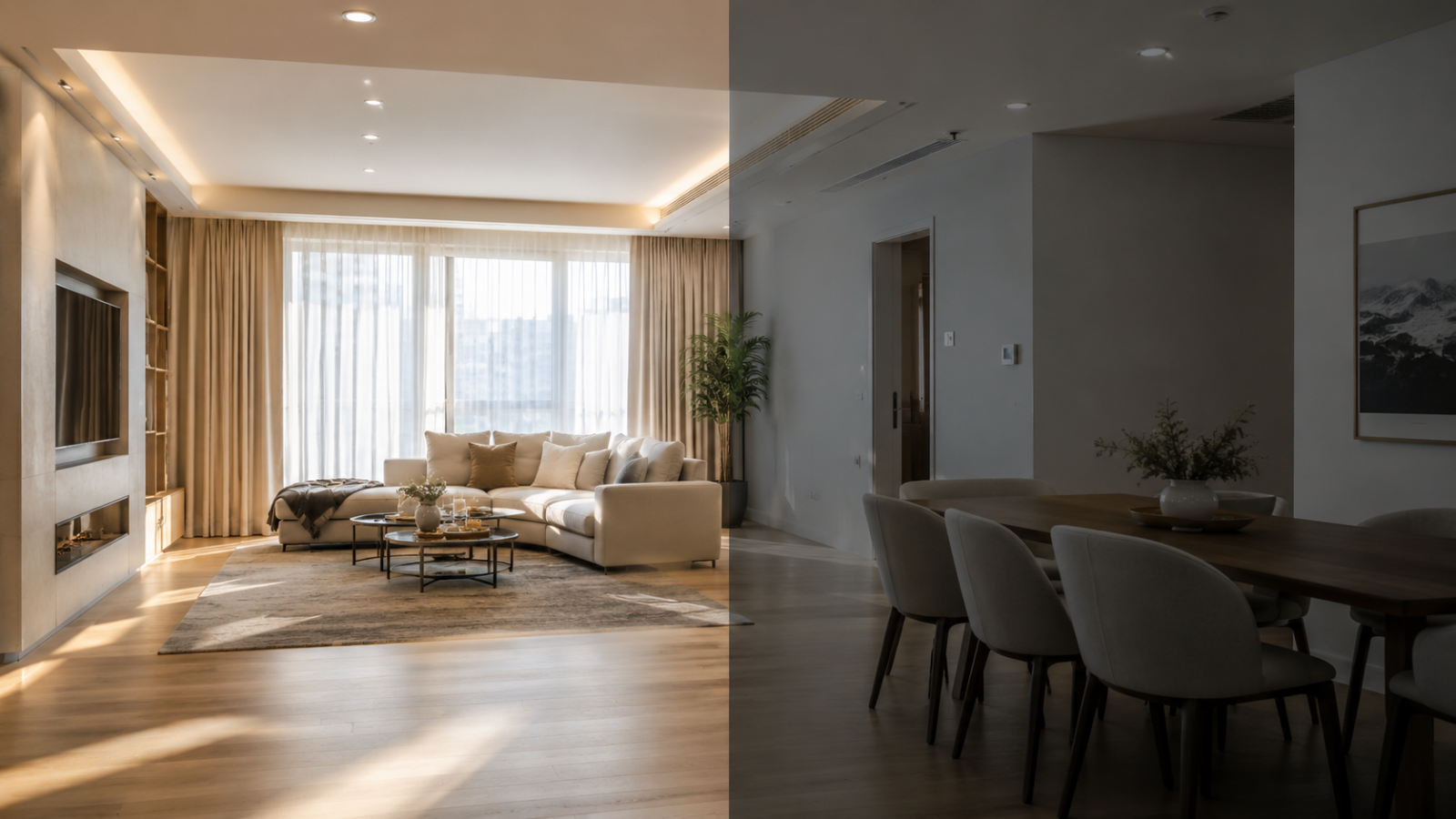
At Zelanos Realty Solutions, we face the challenges of visual real estate presentation every day. As a company specializing in professional real estate photography, video production, and 360-degree virtual tour creation, this topic is key for us. We created this guide to provide clear direction for both property owners and industry professionals looking to enhance their visual content.
High-quality property photography is one of the most critical steps in the entire marketing process. A potential buyer's first impression is formed within seconds on their screen. A poorly photographed property—with dim or distorted shots—can sit on the market for months without generating real interest, directly impacting its final sale price. Proper presentation doesn't just attract viewings; it builds trust.
To keep things organized, we divided the most common mistakes into two categories: basic rules when shooting with a phone, and technical details from professional practice.
Part 1: If You Still Shoot with a Phone – What to Watch For
Smartphones today feature powerful cameras, but a lack of proper technique leads to amateurish results. If you are photographing a property yourself, be sure to avoid the following missteps:
- Vertical Shots Instead of Horizontal
Mistake: Shooting in vertical format (16:9 vertical) creates narrow "strips" on real estate portals, leaving huge empty spaces on the sides. - Rule: Always shoot horizontally (16:9 or 4:3). This captures the true volume of the room and ensures correct rendering on listing websites.
- Crooked Vertical Lines (Falling Perspective)
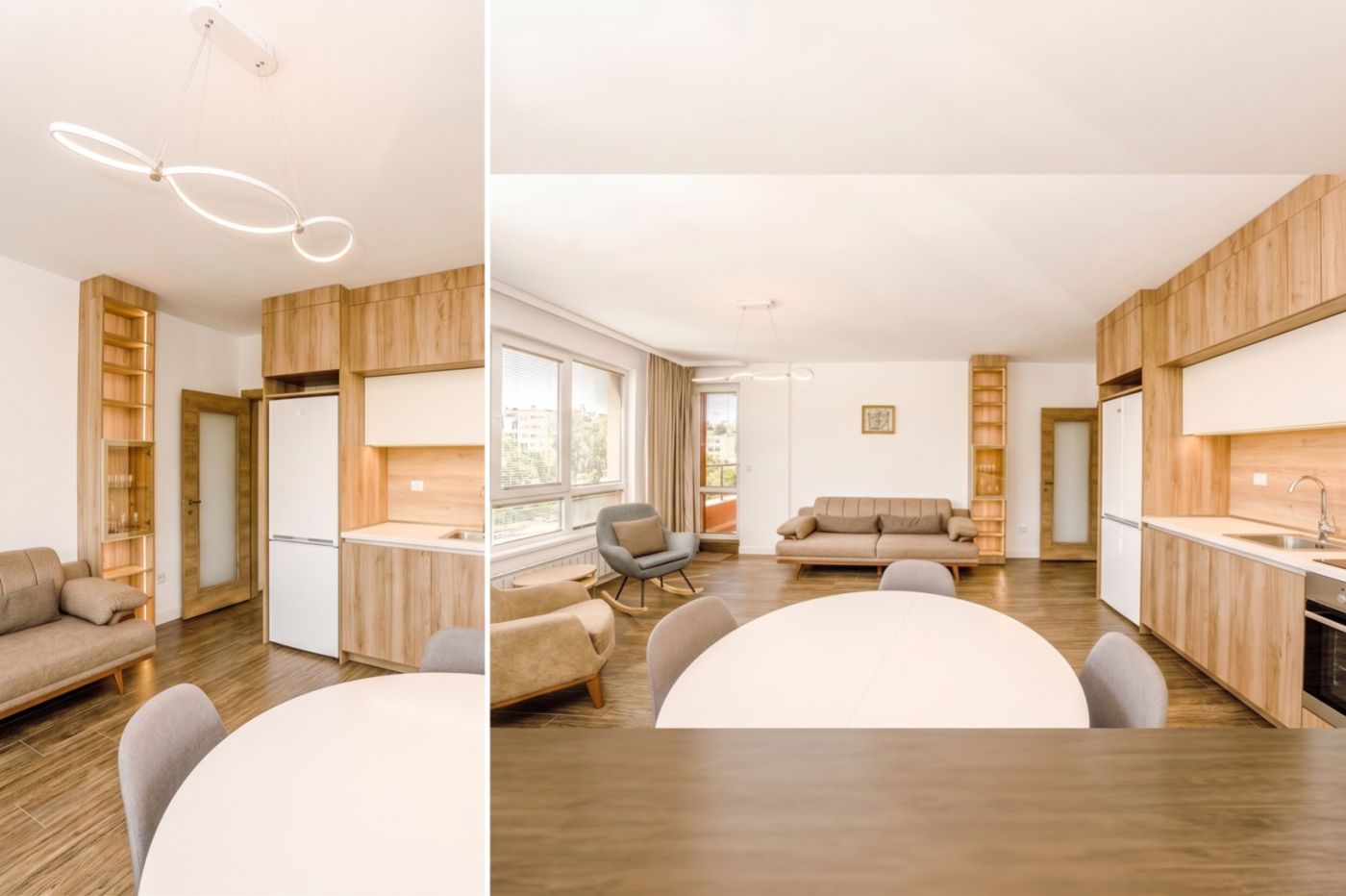
Mistake: Tilting the phone up or down causes walls, doors, and windows to "fall" backward, distorting the room's geometry.
Rule: Hold the phone perfectly vertical, roughly at chest or waist level. Always enable the grid lines (Grid) on your screen to monitor verticals.
- Dim Shots and Shooting Straight into Direct Light
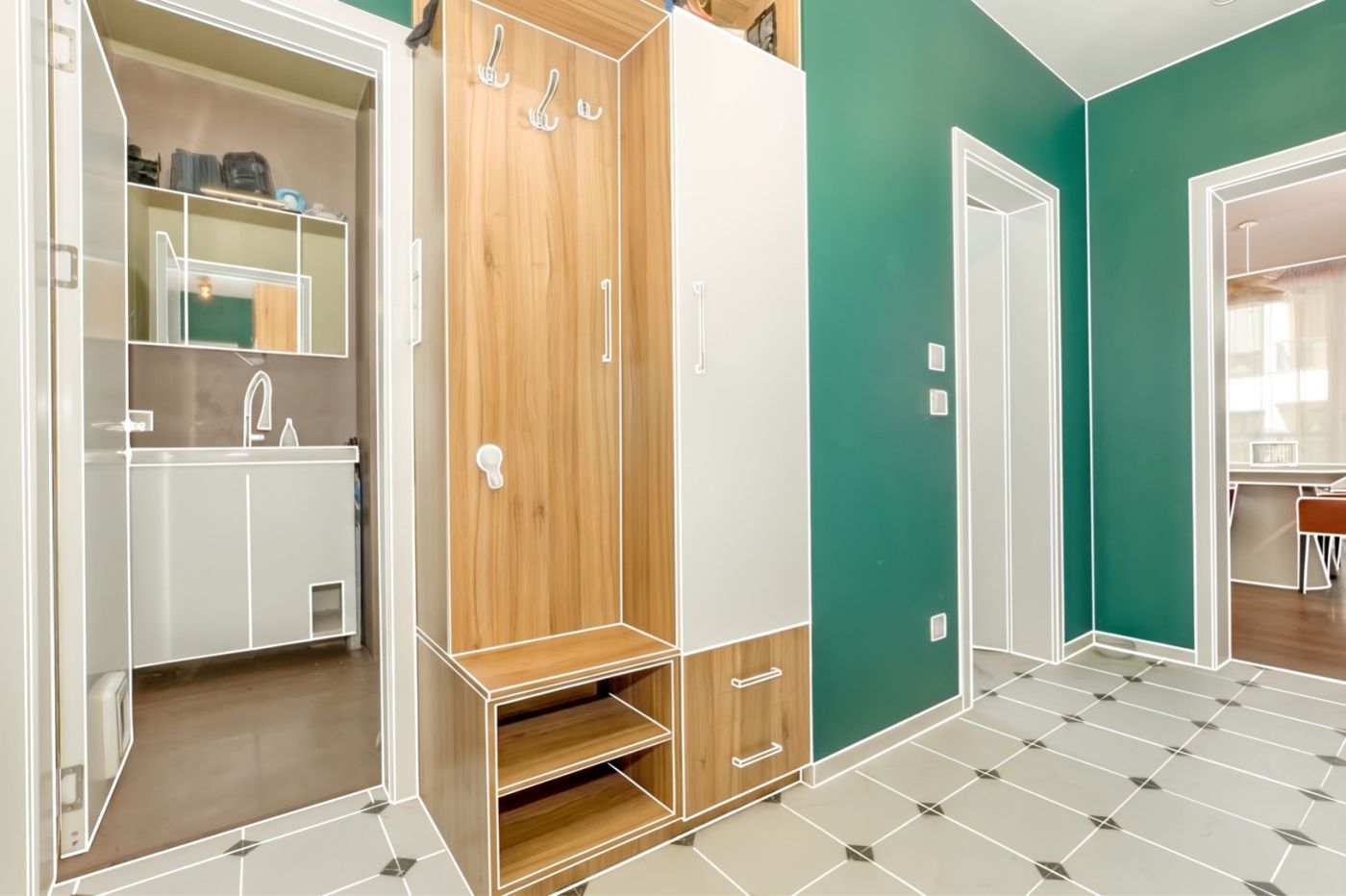
Mistake: Dark rooms appear smaller and gloomy, while shooting directly against a bright window turns the room into a dark silhouette.
Rule: Choose a time of day with maximum natural light. Turn on all artificial light sources in the room and position the camera so the primary light falls from the side or behind you. - Clarification: In professional photography, supplemental lighting, off-camera flash, precise shooting techniques, and detailed post-processing play a vital role here.
- Digital Zoom and Optical Distortions
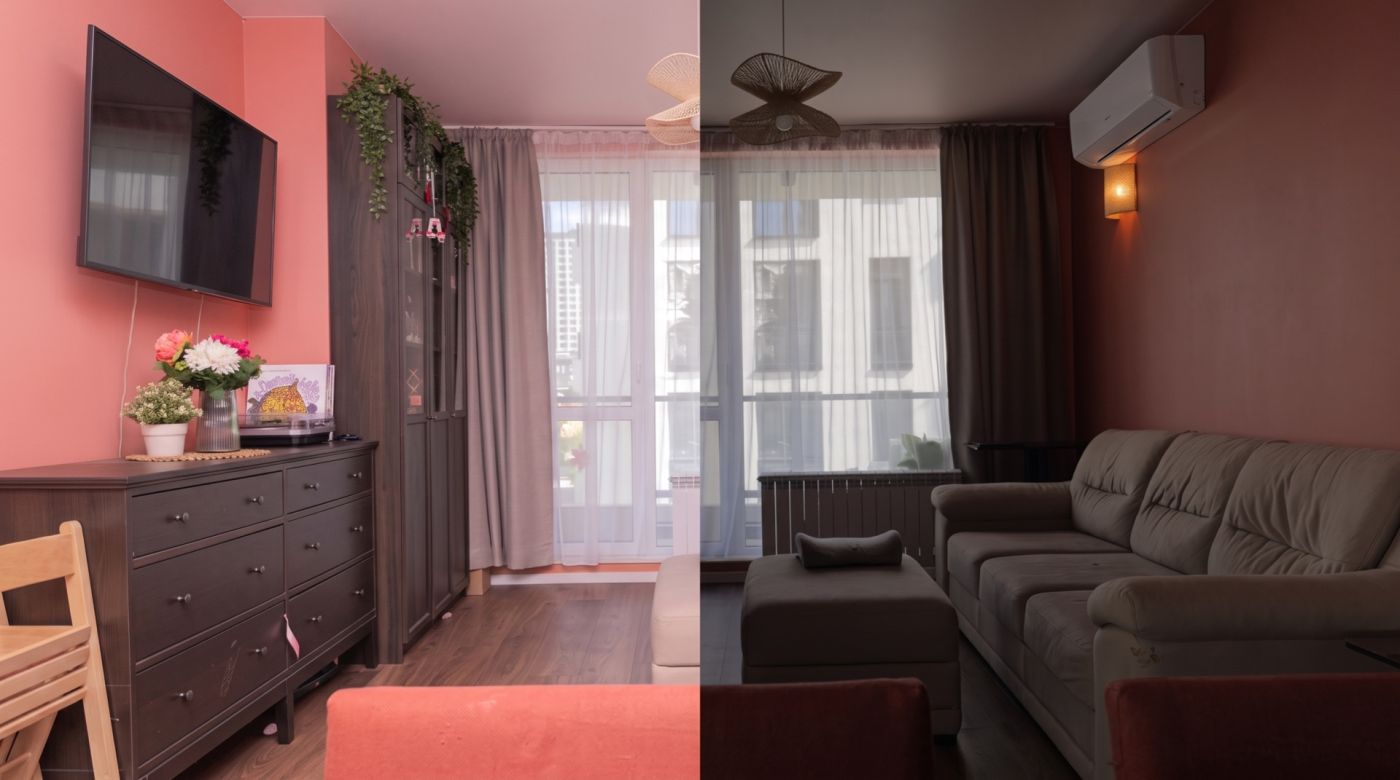
Mistake: Using digital zoom severely degrades image quality and introduces pixelation. On the flip side, the ultra-wide lens on some phones warps corners like a "fisheye."
Rule: Wipe the lens clean, place the phone on a tripod, and step back into the farthest corner of the room instead of zooming digitally.
- Lack of Preparation and Cluttered Spaces
Mistake: Personal belongings, cables, open toilet seats, or cleaning products in the bathroom distract attention from the property's architecture.
Rule: Perform basic cleaning and depersonalization (Home Staging). The buyer needs to see the space and its potential, not someone else's daily clutter.
Part 2: Professional Interior Photography Mistakes
When the goal is achieving a top-tier presentation, the difference between an amateur and a professional shot lies in precise control over light, geometry, and color.
1. Improper Shadow Control
Problem: Deep, harsh shadows beneath countertops, kitchen islands, and room corners. Attempting to lift these shadows digitally in post-processing (via HDR or Shadows/Highlights sliders) introduces noise artifacts, ruins grain, and destroys the natural texture of wood, stone, and tile.
Professional Solution: Utilizing strobe lighting (external flashes) and techniques like Flambient (blending ambient light with flash) to fill shadows and balance exposure directly in-camera during the shoot.
2. Incorrect Camera Height
Problem: Positioning the camera too low or too high distorts room proportions—resulting in excessive empty ceiling space or awkward angles relative to key furniture pieces.
Professional Solution: Height is carefully adjusted based on the subject (e.g., in kitchens, positioned just high enough to see over countertops). To prevent capturing excess ceiling without tilting the camera, specialized Tilt-Shift lenses are used, or precise cropping is executed from higher-resolution files.
3. Inaccurate Color Rendition
Problem: Mixing natural daylight with warm incandescent bulb lighting creates unpleasant yellow, green, or blue color casts across walls, ceilings, and floors, distorting the interior's true colors.
Professional Solution: Setting a manual White Balance for the specific space and completely neutralizing unwanted color casts using controlled flash output with neutral color temperature.
4. Using the Wrong Focal Length
Problem: Driven by the idea that "space sells," many photographers use ultra-wide lenses (under 15mm). This stretches objects near the edges, creates unrealistic separation between elements, and gives a false sense of scale that disappoints clients during in-person viewings.
Professional Solution: Using balanced wide angles for general wide shots, and longer focal lengths (18–24mm and up) for details, bathrooms, and feature accents to tell a story without geometric distortion.
5. Overly Aggressive Window Pulls
Problem: Artificially "pasted-in," overly saturated, and dark window views that look like fake posters. This makes the entire image appear unnatural, painterly, and unprofessional.
Professional Solution: The window view is exposed clearly only when there is genuine value outside (mountains, sea, private yard, pool). If the outside view shows a blank wall, an adjacent building, or an unsightly courtyard detail, the window is left softly blown out to avoid pulling focus away from the interior.
Professional Presentation as an Investment
Whether you are preparing an apartment for sale, searching for tenants, or showcasing a premium commercial space, visualization quality dictates the speed and value of the transaction. A properly photographed property stands out in a crowded market and attracts genuinely interested buyers.
The team at Zelanos Realty Solutions offers a complete range of services in architectural and interior photography, video production, and 360-degree virtual tours. Our experience and high-end equipment allow us to serve clients and projects across Sofia and nationwide.
For more insightful resources, tips on staging your property before a shoot, or to explore our portfolio, visit us at zelanos-realty.bg.